
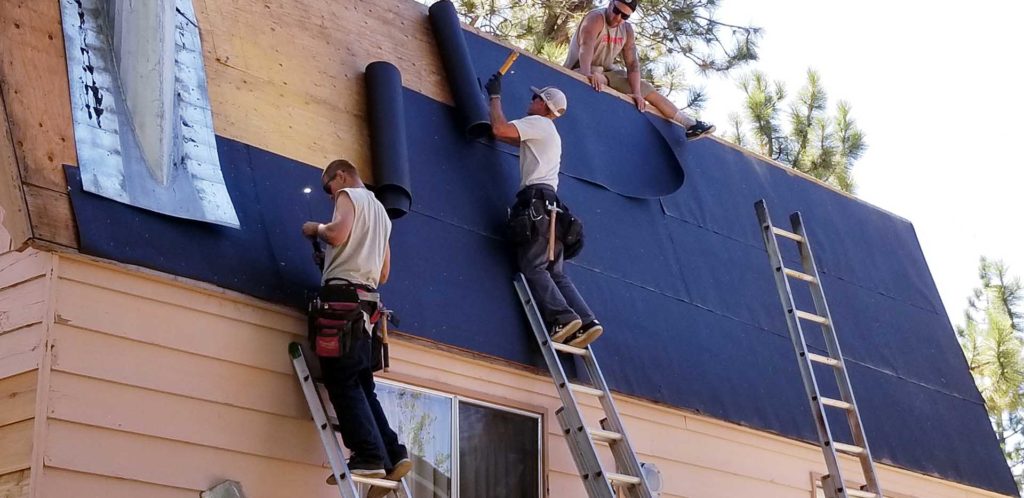
Siding Repair or Replacement? How to Tell What Your Hudson Valley Home Needs
On this page · 8 sections
A cracked panel by the back door. A strip of vinyl that blew loose in the last storm. A wall that looks a shade lighter than the rest of the house. Homeowners around Newburgh call us about siding for all kinds of reasons, and nearly every call comes back to the same question: can you just fix the bad pieces, or does the whole house need new siding?
It's a fair question, and the honest answer is that plenty of siding problems are repairs. But siding has a job beyond looks. It's the outer layer that keeps rain, wind, and snowmelt away from the wrap and sheathing behind it, and when that layer starts failing in more than one place, patching it panel by panel stops making sense. Here's how we sort one situation from the other when we walk a house with the owner.
The short answer
Bottom Line Up Front
If the damage is limited to a few panels on one wall and the wall behind them is dry and solid, repair it. If the damage shows up on several walls, the panels are brittle or warped across the house, or moisture has reached the sheathing, replace it.
A siding repair is the right call more often than many homeowners expect. But siding is a system: the panels, the wrap behind them, and the sheathing all work together to keep water out. Once that system is failing in more than one place, patching becomes paying for the same problem twice. The trick is knowing which situation you're in before a Hudson Valley winter finds the weak spots for you.
The rest of this post is the four questions behind that answer, plus a decision checklist at the end you can run from your own yard.
Question 1: How much of the house is affected?
Start by walking all four sides of the house, not just the wall you noticed. Damage that's confined to one area usually has one cause: a branch that came down, a grill parked too close to the wall, a corner the wind keeps catching, or a gutter overflowing onto the same spot every time it rains. Fix the cause, replace the damaged panels, and the rest of the siding can keep doing its job.
When you find the same problems on several walls, the story changes. Cracks on the north side and the south side, loose panels on the front and the back, warping in more than one place: that's not bad luck in one spot. That's siding wearing out as a whole, and replacing it piece by piece means paying for the same visit again and again.
Repair vs. replace at a glance
This is the comparison we'd sketch out in the driveway. Each row is a real decision factor; the highlighted cell is the smarter call when that factor is the one driving your decision.
| Factor | Lean Repair | Lean Replace |
|---|---|---|
| How much is damaged | A few panels on one wall | Damage on several walls |
| Cause of the damage | One clear cause, like a branch or a grill | General wear across the house |
| Panel condition | Flat, flexible, locked in place | Warped, brittle, pulling loose |
| Wall behind the siding | Dry and solid | Soft spots or signs of moisture |
| Color match | Repair is on a wall nobody sees | Patch would show on the front of the house |
| Upfront cost | Lower | Higher |
| Insurance event | Minor damage, under the deductible | Storm claim covers the siding |
With the siding still on, you can't see the sheathing, but you can feel it. Press gently on the wall just below a cracked or loose panel, then do the same on a healthy wall. If the damaged area feels soft or spongy, or the panels move more than they should, water may have been getting behind the siding for a while. That's the point where an inspection matters more than a patch.
Question 2: What's happening behind the siding?
Siding is a rain screen, not a waterproof skin. Behind it sits a weather-resistant wrap and the sheathing that ties the wall together, and those layers are what actually keep water out of the house. As long as the wrap and sheathing are dry and solid, a damaged panel is a cosmetic and protective repair. Swap it out and you're done.

If water has been getting in for a while, though, you'll start seeing it from the inside: peeling paint on interior walls, stains near windows, or a musty smell in a room along an exterior wall. Once moisture reaches the sheathing, the repair isn't the siding anymore. It's the wall. When that damage is spread across the house, a full replacement is the cleanest way to strip everything off, fix what's underneath, and put new wrap and siding back on. We cover more about protecting those layers in our post on keeping siding in shape for storm season.
Question 3: What are the panels themselves telling you?
Stand back from each wall and look along it rather than straight at it. Healthy siding sits flat, runs in straight lines, and has an even color from one end to the other. Siding near the end of its life gives itself away: panels that bow, buckle, or ripple; pieces that crack when bumped instead of flexing; edges that have pulled out of the locking strip; and fading so heavy that one side of the house no longer matches the other.

Color is where repairs hit their limit. New panels are bright; panels that have spent years in the sun are not. A repair on a back wall nobody sees is easy to live with. A patch across the front of the house that reads as a different color from the street is something many homeowners decide they'd rather not look at every day, and that's a perfectly good reason to weigh replacement.
Signs it's a repair
The siding still has life left and the problem is contained. Fix it and move on.
What we look for
- The damage is on one wall and traces back to one cause, like a fallen branch or an overflowing gutter.
- The panels around the damage are still flat, flexible, and locked into each other.
- The wall behind the damaged area feels firm, with no soft or spongy spots.
- No peeling paint, stains, or musty smells on the inside of that wall.
Signs it's a replacement
The siding is failing as a system. Patching buys time, not a fix.
What changes the answer
- Cracked, loose, or missing panels on more than one side of the house.
- Bowing, buckling, or rippling panels along whole walls.
- Peeling paint, water stains, or a musty smell inside rooms along exterior walls.
- Fading so uneven that new panels would stand out from the street.
Putting new siding over old, or snapping new panels over a damaged area without looking behind it, can hide a problem rather than fix it. If water has been reaching the sheathing, covering it up just traps the moisture where you can't see it. Before any siding goes on, ask what's being checked underneath. A good estimate tells you what the wall looks like, not only what the new siding will look like.
Question 4: What else is going on with the house?
This is the tiebreaker. If your siding sits right on the line between repair and replacement, the rest of the house often decides it. Storm damage across several walls may be an insurance claim, and a claim that covers the siding changes the math completely. Our storm damage team documents the damage with photos so the claim has what it needs, and our post on working with the insurance company walks through the process.
Planning a new roof? Doing roofing and siding together means one crew on site, one set of ladders and tarps, and a house that's finished from top to bottom at the same time. And if you plan to stay in the house for years, replacing worn siding on your own schedule beats waiting for the next nor'easter to make the decision for you. Financing options can make that schedule easier to keep.
“The siding is the part you see. The wall behind it is the part that matters. We'd rather tell you a few panels will do it than sell you a house full of siding you don't need.”— Xterior PRO Roofing & Siding, LLC
The decision checklist
If you only use one part of this post, use this table. Every row is something you can check yourself from the yard or from inside the house. Most homes match more than one row, so the right call is whichever column wins most of your rows.
| If your siding… | Repair | Replace |
|---|---|---|
| Has a few damaged panels on one wall | Yes | Overkill |
| Has damage on several walls | Stopgap only | Yes, usually |
| Is warped or rippled along whole walls | No | Yes |
| Cracks when bumped instead of flexing | Won't last | Yes |
| Sits over a wall with stains or musty smells inside | Not until the wall is checked | Yes |
| Has faded unevenly on the front of the house | Patch may show | Yes, for one color |
| Took storm damage a claim may cover | If minor | If the claim covers it |
| Is due for work at the same time as a new roof | If damage is small | One project, one crew |
The bottom line
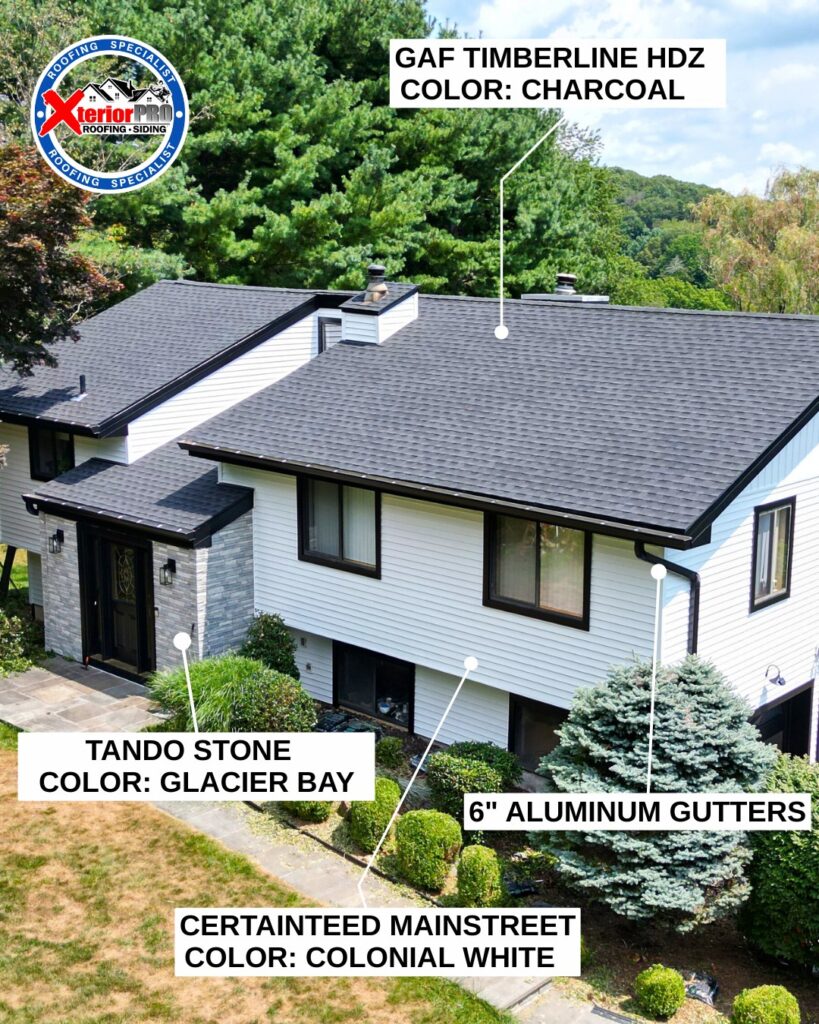
Most siding problems homeowners call about are repairs: a few panels, one wall, a clear cause. Replacement earns its place when the damage is on several walls, the panels are brittle or warped across the house, moisture has reached the wall behind, or a storm claim or a new roof makes doing it all at once the smarter move. You can see examples of both in our project gallery.
If you're not sure which side of the line your house is on, that's what a free inspection is for. We'll walk every wall, check what's behind the damaged areas, and tell you honestly whether it's a repair or a replacement, even when the honest answer is the smaller job. We do siding installation, repair, and replacement with our own in-house crews across the Hudson Valley, including Poughkeepsie, New Windsor, Wappingers Falls, Fishkill, and Middletown. Call 845-549-2069 to set it up.